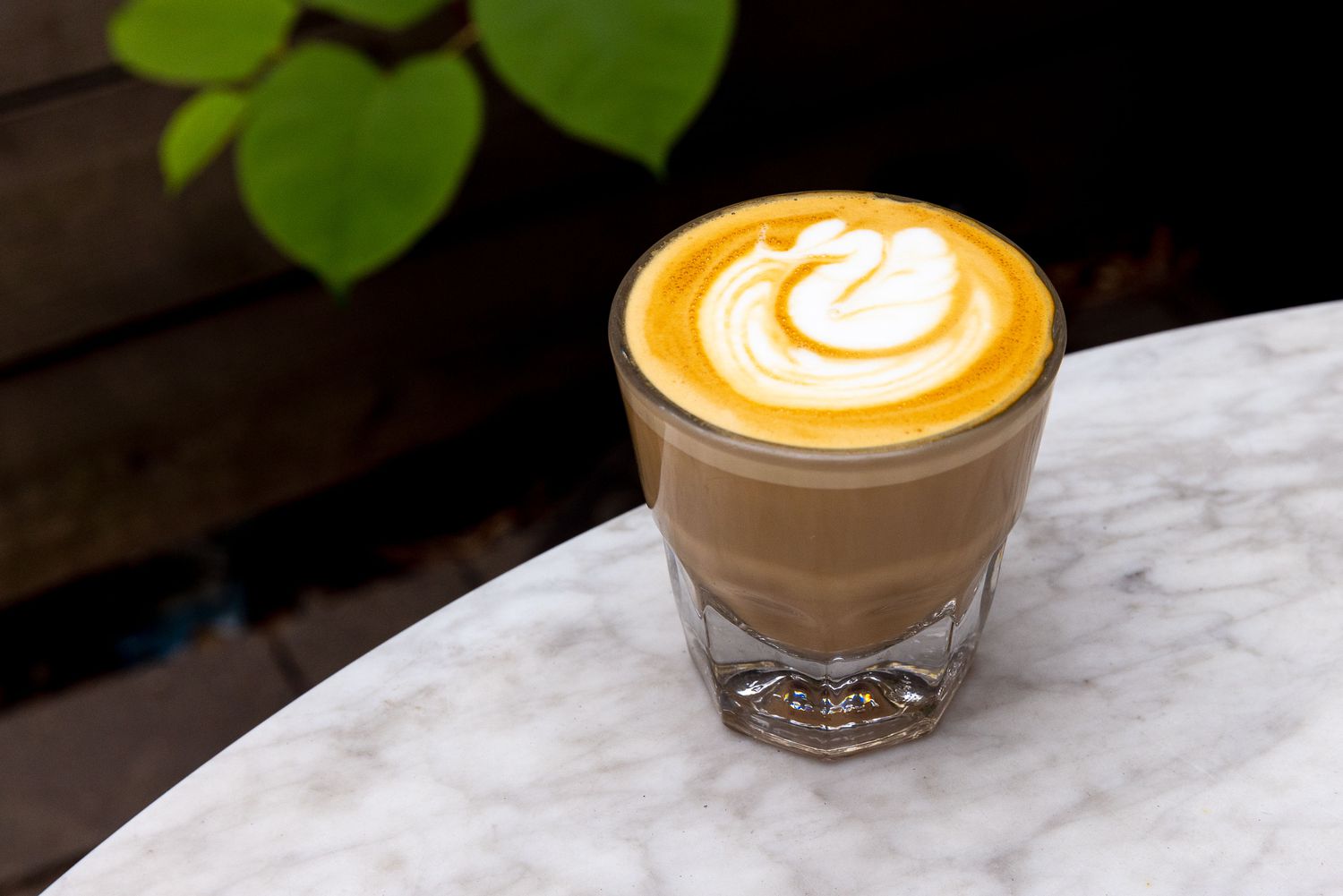
What is a cortado, you’re asking me? What would I know, do you think I’m some kind of coffee geek or something? Oh, wait OK so yup I’m a total coffee geek, espresso nerd & lover of all milk and espresso-based coffees including cortado, and I’m probably not the worst person in the world to ask what is a cortado.
Like all things espresso, though, this isn’t quite as simple a question as you may think. In fact, there isn’t really a straight, simple answer to this, well there is I suppose, but it’s not comprehensive and leads to many other questions. So what I’ll do is I’ll give you the simple answer first, for anyone who just wanted to get a very quick idea of what a cortado is, and then for those who want to dig deeper, I’ll give some more in-depth cortado commentary.
What is a Cortado Coffee? : Simple Answer
The very simple answer to the “what’s a cortado” question, is that it’s a small and intense espresso-based drink made by “cutting” espresso with hot, steamed milk. Small, often being only 4-6 ounces in volume, and intense being often one to one milk to espresso or in some cases even more intense than that.
If you’re looking to compare the cortado to espresso based drinks that may be more familiar to you, think of an espresso macchiato only made with microfoam and not the drier, more stretched cappuccino foam, or think of a smaller and more intense flat white, in both cases, you’ll be close to the cortado, although I do need to point out that all of these labels for the various espresso based beverages are used fairly loosely, and there are overlaps and interpretations, as I’ll describe shortly.
I think the easiest description of a cortado is probably to compare it to a macchiato, and the main difference between the two is simply that the macchiato originated in Italy, and the milk would have been stretched more for drier foam, while the cortado originated in Spain and would have been made with “wetter” milk that hadn’t been stretched to the same degree.
While it became common for Italian baristas to “mark” or “stain” espresso with a small amount of milk, leading to the Caffè macchiato, also known as espresso macchiato which literally means marked, or stained – a similar thing happened in Spain, where baristas “cut” espresso with a small amount of steamed milk, leading to the cortado which is the word to describe something that has been cut.
This is probably the most simple comparison where intensity is concerned, where it doesn’t quite work is texture, because as I’ve mentioned cortado would have originated with a wetter milk texture vs the macchiato, so where texture is concerned just keep the flat white texture in mind.
So to conclude, then, a good way to describe what is a cortado would be the intensity of an espresso macchiato with the texture of a flat white, which is of course only helpful if you’re familiar with the intensity of macchiato and the texture of flat white ;-).
The Original, Traditional Cortado
As far as I’ve been able to ascertain, the original cortado originates in Northern Spain, made by mixing (cutting) espresso with steamed milk, in a small glass. The important things, I think, about the cortado and what separates it from other similar short espresso-based drinks, are the milk texture and the intensity.
It’s separated from espresso macchiato mainly by texture, as macchiato, or traditional macchiato at least, would be made with stretched, foamed milk, while as far as I can tell the cortado was always, as far back as the early 1960s, made using heated steamed milk only, not stretched, so this would have been what we now refer to as microfoam texture.
What makes the cortado different from other espresso and milk-based beverages then, is its intensity. A flat white for example is very similar in texture, but different in intensity.
See how to make the perfect Flat White:
Cortado Interpretations & Overlaps
One of the reasons that “What is a cortado” isn’t as simple a question as it may appear to be, is that as with most espresso-based coffees there are so many different interpretations of cortado, and exactly what you’re served when you order one will depend on where you’re ordering it.
When I say “where”, as with most espresso-based drinks, cortado will differ depending on what country or region you’re in, even what city you’re in, and sometimes what coffee shop you’re in, in fact, there will often be (albeit probably more subtle) differences depending on which barista serves you.
If you’re thinking that you’d get the most traditional cortado in Spain, by the way, while this would make sense in theory, it’s not quite the case in practice, depending on what cafe you visit, in cafes in most Spanish cities you’re more likely to find a flat white on the menu than a cortado. When you do find a cortado you’ll often find it’s just as modern an interpretation of a cortado as you’ll find in coffee shops in most other parts of the Western world, and this is even true within Basque Country where the cortado originated.
If you were to ask me what I think a traditional cortado is, I’d say it’s a small intense espresso and milk beverage served in a small glass, made with microfoam as opposed to cappuccino foam, at an espresso to milk ratio of approx 1:0.5 – 1:1, meaning from two parts espresso one part milk to one part espresso one part milk.
The most common interpretations you’ll find are where size and intensity are concerned. You’ll find some cafes serving bigger and slightly less intense cortado and these overlap with other drinks including the latte piccolo and the flat white. More on these shortly.
I would encourage you to be bold when ordering your drinks, though, and feel free to tell the barista how you would like your cortado.
So, for example, if you ask the barista what ratio of espresso to milk they usually use for their cortado, don’t be afraid to ask them to tweak this for you. For example, if they say they usually add 4 ounces of milk to a 2 ounce shot, just ask them to just add two ounces of milk for a 1:1 cortado, if that’s the kind of intensity you’re looking for.
Is a Cortado the Same as Flat White?
This really depends on how you would define both of these drinks, because there is no rule book that states what exactly makes a cortado or a flat white, for example, and given that the milk texture used for a flat white is the same texture usually used for a cortado, it’s very common for there to end up being some overlap between cortado and flat white.
For example, you’ll find some coffee shops serving smaller more intense flat whites that are verging on cortado territory, and you’ll find some serving bigger, slightly milder cortado that verges on flat white territory, so while I’d say that traditionally a cortado is smaller and more intense than a flat white, I do think these are drinks that will overlap depending on where you drink them.